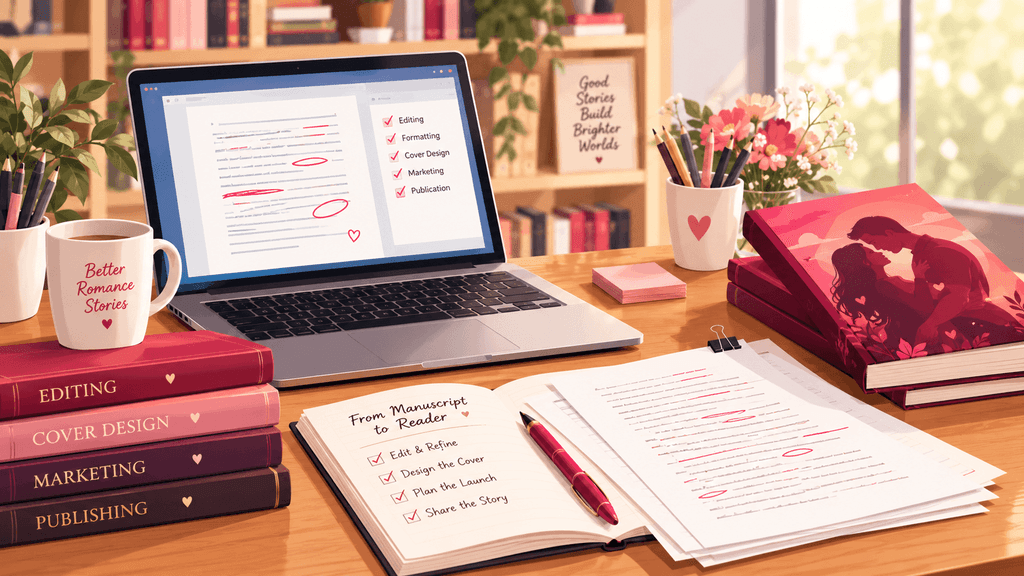
Category: Romance Publisher

  • What Do Romance Publishers Look for in a Manuscript?

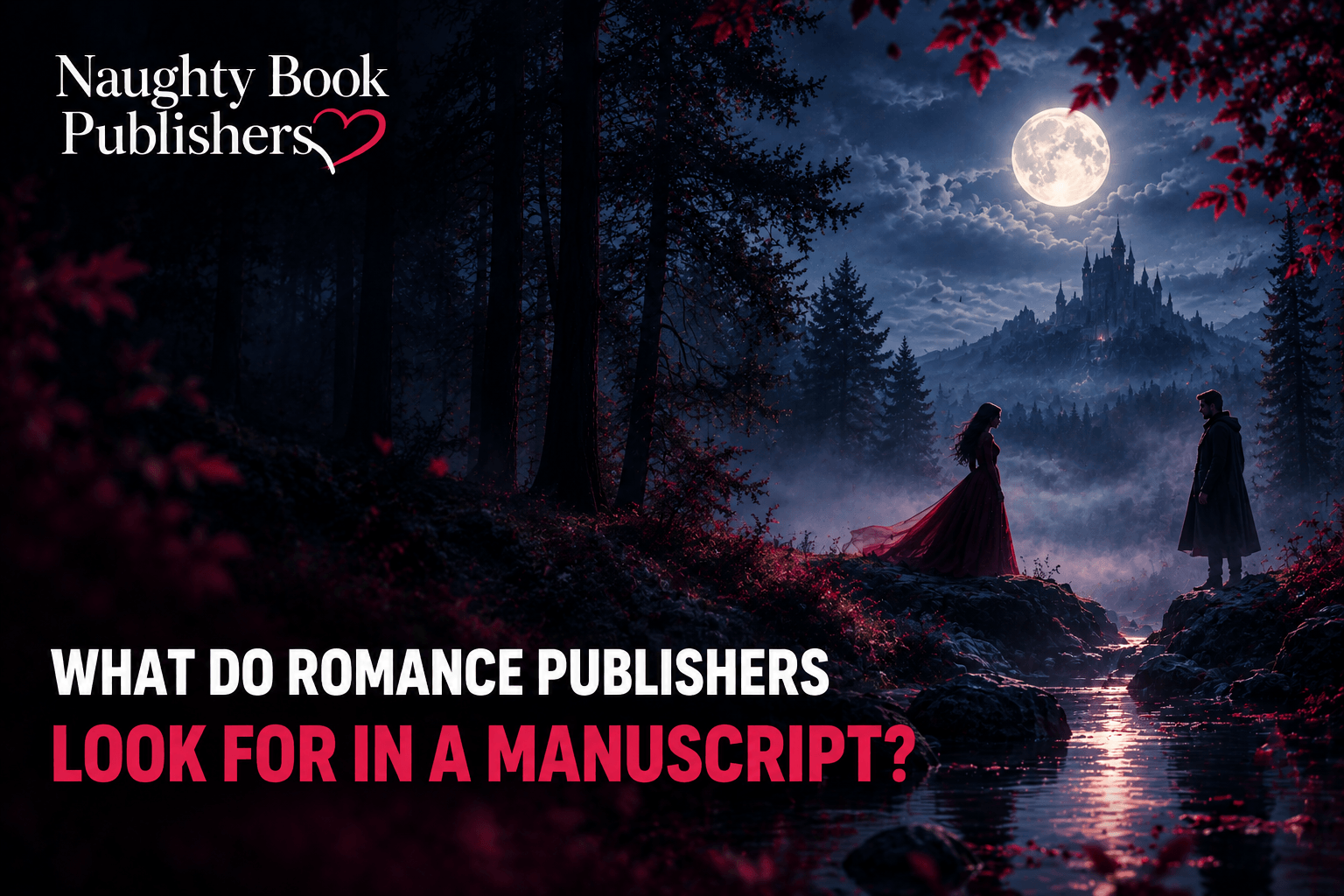
    What Do Romance Publishers Look for in a Manuscript?

    A romance manuscript can have a beautiful premise and still fail to make an impression if the story does not deliver what readers expect. So, what do romance publishers look for in a manuscript?

    They usually want more than a love story. They want a compelling story, mind-grabbing romance, strong characters all in all a book that stays with readers long after they are finished reading.

    ✦ An Independent Romance House

    Ready to Publish Your Romance Novel? Let’s Bring Your Story to Life

    Naughty Book Publishers helps romance authors polish, package, and publish fierce, unapologetic fiction — from manuscript to cover to release.

    Publishers must understand who the book is for and how to position it in the market, given how competitive the romance category has become. Canadian romance titles alone saw a 640% rise in sales over the past five years, driven largely by breakout authors like Carley Fortune and Elle Kennedy – showing just how fast reader appetite for the genre is expanding.

    Key Takeaways

    • Romance publishers look for compelling characters, story that sells and captures reader’s heart and mind.
    • Strong writing matters, but so do structure, pacing, market awareness, and a polished manuscript.
    • Publishers must understand audience’s need and market the book in a way that caters to both the audience’s and author’s expectations.

    What Do Romance Publishers Look for in a Manuscript?

    Romance publishers look for a manuscript that combines a story with professional writing and clear market positioning. A contemporary romance will not necessarily follow the same conventions as a historical romance, dark romance, paranormal romance, or romantasy. However, several elements play a significant role.

    Your writing should give readers a solid reason to invest their time and money in buying and reading your manuscript.

    The pacing should keep the story moving and simultaneously keep the readers engaged. The ending should provide the emotional satisfaction romance readers expect.

    A best-selling manuscript does not simply contain romance. It makes the romance the reason readers keep turning pages.

    Why the Storyline Matters?

    The romantic relationship should be central to the manuscript. Readers should understand why the main characters are drawn to one another. Attraction alone is rarely enough to sustain an entire novel.

    The characters should have conflicting goals, misunderstandings or how they overcome a challenging situation. These obstacles create opportunities for the relationship to evolve.

    A contemporary romance might bring together two people whose careers place them in competition.
    A historical romance might place the relationship under social expectations. A dark romance may build tension around a complicated power dynamic.

    A romantasy may combine the romantic conflict with a larger fantasy storyline. The details differ, but the relationship needs a clear emotional journey.

    Do Romance Publishers Look for Strong Characters?

    Yes. Compelling characters give readers a reason to become emotionally invested in the relationship. Your protagonist should have clear motivations, desires, fears, and weaknesses.

    The love interest should feel like a complete character rather than existing only to support the protagonist. Character development is especially important when the story involves emotional transformation. If a character begins the novel afraid of commitment, for example, the story should show how experiences within the relationship challenge that belief.

    The transformation should feel earned rather than suddenly appearing near the ending. The basic idea of falling in love may be familiar. The characters experiencing it should not feel interchangeable.

    ✦ An Independent Romance House

    Ready to Publish Your Romance Novel? Let’s Bring Your Story to Life

    Naughty Book Publishers helps romance authors polish, package, and publish fierce, unapologetic fiction — from manuscript to cover to release.

    How Important Is Chemistry Between the Main Characters?

    Chemistry creates the emotional energy of a romance novel. Readers need to feel that the characters have a reason to notice each other, challenge each other, or understand each other. Chemistry does not always mean immediate attraction.
    Sometimes it develops through banter, shared experiences, disagreement, or vulnerability. The important point is that the relationship should feel alive on the page. Dialogue can help. Small gestures can help. Conflicting personalities can help. Moments of vulnerability can help.

    When these elements work together, readers become invested in what happens between the characters.

    Does Genre Matter to Romance Publishers?

    Yes. Genre matters because publishers need to understand how a book will reach its intended audience. Penguin Random House specifically advises writers to know their market and understand what readers of their genre expect. Your manuscript should make its identity clear.

    This is particularly important in romance because the category contains many distinct subgenres. A contemporary romance has different conventions from historical romance. Dark romance has different expectations from sweet romance. That does not mean copying books already on the market.

    It means understanding the expectations surrounding your chosen subgenre and delivering them in your own voice.

    Do Romance Publishers Care About Writing Quality?

    Yes. A strong story can lose its impact when the prose is difficult to read. Grammar, punctuation, clarity, consistency, and sentence structure is what makes a manuscript standout.
    Penguin Random House recommends proofreading carefully and following the submission requirements of the individual publisher or organization. Remove unnecessary repetition. Check character names and details for consistency. Make sure scenes transition clearly.

    What Should Romance Authors Know About Market Appeal?

    A publisher needs to know who will buy and read the book. That is why market appeal matters. You should be able to describe your romance clearly.

    What subgenre is it?

    Who is likely to read it?

    What makes the story distinctive?

    Which books might appeal to a similar audience?

    You do not need to turn your manuscript into a marketing document. But you should understand where it belongs. A book that is difficult to categorize can be harder to position.

    Clear genre identity helps readers, retailers, agents, and publishers understand what they are looking at.

    What Should You Check Before Submitting Your Romance Manuscript?

    Before submission, step away from the manuscript and examine it as a reader.

    Make sure the manuscript follows the requirements of the publisher or agent you are approaching. Penguin Random House emphasizes that individual submission requirements matter and that writers should make sure their work is correctly formatted and proofread.

    Romance authors looking for professional guidance throughout the publishing process can explore Naughty Book Publishers’ romance publishing services. Submission should not be the final stage of drafting. It should be the result of thoughtful revision.

    Romance Manuscript Checklist

    Manuscript ElementWhat to Check
    PlotDoes the story move toward a clear resolution?
    ChemistryDoes the relationship feel convincing?
    PacingDoes each major scene move the story forward?
    GenreDoes the manuscript fit its chosen romance subgenre?
    WritingIs the manuscript clear, consistent, and polished?
    MarketCan you identify its intended readers?

    Real-World Scenarios

    Scenario 1: A Strong Contemporary Romance

    An author writes a contemporary romance about two professionals competing for the same promotion. The characters have clear goals. Their rivalry creates natural conflict. As they spend more time together, their attraction develops alongside mutual respect.

    The manuscript has a recognizable romance premise but gives it a distinct character dynamic. This makes the story easier to understand while still allowing the author to offer something personal.

    Scenario 2: A Romance with No Spark

    Another manuscript begins strongly. The characters have chemistry and the opening creates curiosity. However, the middle repeats the same arguments and attraction scenes without changing the relationship.

    The problem is not the premise. The problem is pacing and development. Revision should focus on making each important scene create meaningful movement.

    Bonus Point: Read Within Your Romance Subgenre

    Reading books in your chosen subgenre can help you understand its expectations. Study contemporary romance if that is your category.

    Read historical romance if your manuscript belongs there. Pay attention to how successful books establish characters, conflict, chemistry, pacing, and emotional payoff.

    The goal is to understand the reading experience your audience expects.

    FAQs

    Can a Romance Manuscript Have a Predictable storyline?

    Yes, a romance novel can be predictable after all nobody wants to see someone die in the end. Predictability is not always a weakness in romance. The key is to make it engaging.
    Plot twists, and emotional tension can keep the readers hooked even when they know where the story is headed.
    A strong romance gives readers the comfort of knowing what kind of emotional experience to expect while still making them curious about how the characters will get there.

    What Makes a Romance Manuscript Stand Out to Publishers?

    A romance manuscript stands out when it combines a compelling relationship with memorable characters. Publishers look for stories that give readers a reason to become invested in the characters. The goal is not to make the story completely unfamiliar.
    It is to give readers an engaging romance experience while offering something distinctive in the characters, setting, or the storytelling approach.

    Which Romance Genre should I choose?

    Think about the reason readers would choose to read what you have written.
    Ask yourself what makes your romance different from other love stories. Is it the modern setting, historical period, forbidden relationship, fantasy world, suspense, or darker emotional themes? The answer can help you identify the most suitable romance genre.
    Make sure that the genre matches the story from beginning to end. Choosing the right genre helps set accurate reader expectations and makes it easier for publishers to understand where your manuscript belongs in the romance market.

    How Can Authors Show Chemistry on the Page?

    Chemistry should develop through the characters’ interactions rather than simply being stated. Their conversations, disagreements, and attraction can gradually reveal why these two people are drawn to each other. Chemistry also becomes stronger when the relationship changes the characters in some meaningful way.
    Readers should be able to understand not only that the characters are attracted to each other, but also why their connection matters to both of them.

    Conclusion: Give Publishers a Manuscript Worth Considering

    What do romance publishers look for in a manuscript?

    They look for a story that understands why two people who are meant to be together are kept apart. They want to give readers reasons to turn the pages till the end, to ultimately keep them hooked.

    Your manuscript does not need to be unlike every romance that came before it. It needs to offer a familiar emotional experience through your own voice, characters, and story. A polished manuscript cannot guarantee publication.

    But it can ensure that when a publisher opens your pages, the story has every opportunity to make an impression.
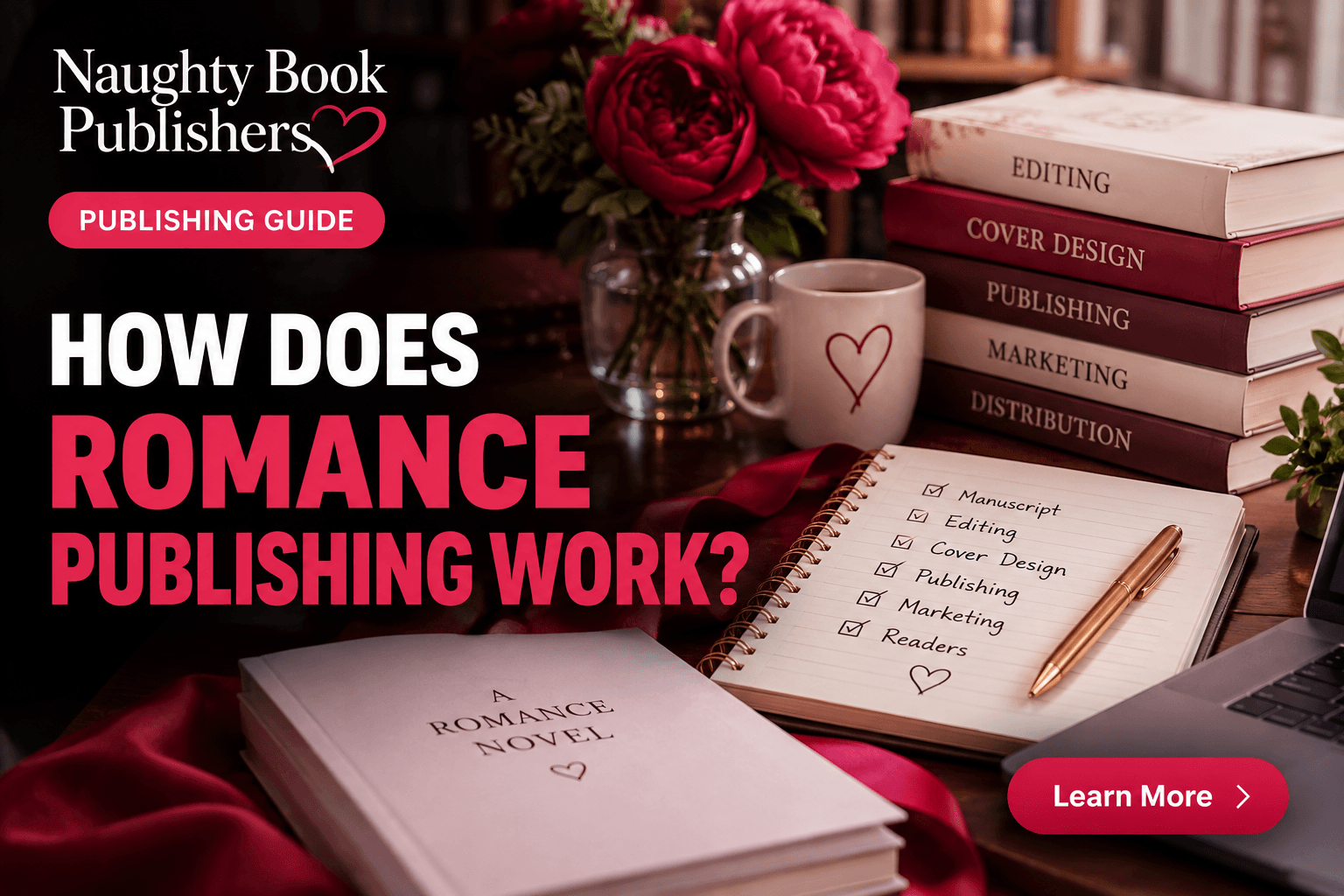
  • How Does Romance Publishing Work?

    How Does Romance Publishing Work?

    Romance publishing can look simple from the outside

    An author writes a love story, sends it to a publisher, and eventually sees the finished book available to readers. But what happens in between?

    Romance publishing involves several stages, and each one can affect how the finished book reaches its audience. The exact process depends on the publishing model and the agreement between the author and publisher. The romance market continues to attract a large and active readership.

    According to Circana BookScan data, romance print sales rose 3.9% in 2025, reaching nearly 44 million units in the U.S.

    That means romance remains a significant part of the adult fiction market. So, how does romance publishing work?


    How Does a Romance Manuscript Enter the Publishing Process?

    The process begins with a manuscript. Before approaching a publisher, an author should understand the type of romance they have written.

    ✦ An Independent Romance House

    Ready to Publish Your Romance Novel? Let’s Bring Your Story to Life

    Naughty Book Publishers helps romance authors polish, package, and publish fierce, unapologetic fiction — from manuscript to cover to release.

    Romance contains many subgenres, including contemporary, historical, dark romance, paranormal romance, romantic suspense, and romantasy.

    Each can have different reader expectations.

    Understanding the manuscript’s identity helps an author approach publisher that are relevant to the book.

    The manuscript should also be revised before submission. Authors should also check the publisher’s current submission requirements. Requirements can vary, so following the specific instructions of the publish is important.

    Once your romance manuscript is ready to move from story to finished book, professional support with editing, formatting, and publishing can help bring each stage together through Naughty Book Publishers’ romance publishing services.


    What Happens After a Romance Publisher Accepts a Manuscript?

    Once a manuscript is accepted, the author and publisher move into the production process according to their agreement.

    The manuscript goes through several stages of editing. Developmental editing focuses on the larger story. It examines structure, pacing, character development, and the progression of the romance. Copyediting addresses grammar, punctuation, clarity, consistency, and sentence-level issues. Proofreading takes place after major editorial and production changes. It helps identify remaining errors before publication.

    The goal is to make the manuscript clear, coherent, and polished before it reaches readers.

    A romance with a strong premise can still lose its impact if the execution is weak.


    Why Editing Matters in Romance Publishing?

    Readers need to care about the characters and believe that their relationship matters.

    Editing helps identify problems that interfere with that experience. For example, character who fears commitment may suddenly overcome that fear near the ending without enough development to make the change believable. Another story may introduce emotional transformation too quickly. These problems can affect the emotional journey.

    Editing also helps maintain consistency. Good editing allows the story to communicate its emotional experience more clearly.


    How Does a Romance Book Get Its Cover and Format?

    Once the manuscript has been edited, it must become a finished book. Cover design is an important part of that process. A cover gives readers an immediate visual impression of the book.

    A contemporary romance may have a different visual identity from a dark romance, historical romance, or romantasy. The interior needs attention too. Formatting determines how the manuscript appears on the page or screen. The purpose is not simply to make the book look attractive.

    The production stage turns edited text into a readable product that can be delivered to readers.


    What Happens During Distribution?

    A finished book needs a way to reach readers. Depending on the publishing model, the distribution channels can include online retailers, bookstores, libraries, or other sales outlets. Print and eBook distribution can involve different systems. The book also needs accurate information for retailers and readers.

    This information includes the title, author name, description, categories, price, and other metadata. Metadata helps communicate what the book is and where it belongs. A romance book that is difficult to categorize can be harder to position.

    A clearly identified contemporary romance, historical romance, dark romance, or romantasy gives retailers and readers a better understanding of what they are looking at.


    ✦ An Independent Romance House

    Ready to Publish Your Romance Novel? Let’s Bring Your Story to Life

    Naughty Book Publishers helps romance authors polish, package, and publish fierce, unapologetic fiction — from manuscript to cover to release.


    How Does Marketing Fit into Romance Publishing?

    Publishing a book and helping readers discover it are not the same thing. Marketing helps connect a book with its intended audience. The exact responsibilities should never be assumed.

    Authors should ask what the publisher actually provides. They should also ask what they are expected to handle themselves. For example, saying that a book will receive “marketing support” does not explain what that support includes.

    Ask about the type of marketing services included. Clear answers prevent confusion later. Marketing is therefore another part of the publishing process that should be understood before an agreement is signed.


    How Do Romance Authors Get Paid?

    Payment depends on the publishing arrangement and the terms of the contract. In a traditional publishing agreement, authors may receive royalties based on book sales. The contract determines how those royalties are calculated.

    Authors should understand exactly what the royalty percentage applies to. Payment schedules matter too. The agreement should explain when royalty statements and payments are issued. Authors must be aware of the services they are paying for.


    What Rights Are Involved in Romance Publishing?

    Rights are another important part of the publishing process. A publishing agreement can address different formats and uses of a book. These may include print, eBook, audiobook, translation, film, television, or merchandising rights.

    The contract may also address territory and exclusivity. Authors should understand which rights they are granting. They should know whether those rights are exclusive and how long the agreement lasts.

    A contract should not be treated as a formality. If an author does not understand important rights provisions, professional legal advice can help explain the agreement before it is signed.


    Factors to Consider Before Signing

    Before signing, ask practical questions.

    • What services are included?
    • Who handles editing?
    • Who designs the cover?
    • Who handles formatting?
    • Where will the book be distributed?
    • What marketing support is included?
    • How are royalties calculated?
    • When are payments made?
    • Which rights does the publisher receive?
    • How long does the agreement last?

    These questions can reveal details that may otherwise be overlooked. Authors should understand the agreement before signing it. If important terms remain unclear, appropriate professional advice can help clarify them.


    Romance Publishing: A Simple Process at a Glance

    StageWhat Happens
    AcceptanceThe author and publisher move forward under an agreement.
    EditingThe manuscript is developed, copyedited, and proofread as needed.
    DesignThe cover and interior are prepared.
    ProductionThe book is prepared for print and/or digital publication.
    DistributionThe finished book becomes available through agreed channels.
    MarketingPromotional activities help connect the book with readers.
    Sales & RoyaltiesSales are recorded and payments are handled according to the agreement.


    Real-World Scenarios

    Scenario 1: The Author Who Asked Questions Before Signing

    An author finishes a historical romance and receives an offer from a publisher. Excited about the opportunity, the author initially focuses on the promise of getting the book published. Before signing, however, the author asks who will handle editing, cover design, formatting, distribution, and marketing.

    The author also asks how royalties are calculated, which rights the publisher receives, and how long the agreement lasts. Some responsibilities that initially seemed unclear are explained in the publishing agreement.

    The author now understands what the publisher will provide and what will remain their responsibility. Instead of entering the publishing process based only on excitement, the author moves forward with a clear understanding of the arrangement.

    Scenario 2: Two Authors, Two Publishing Routes

    Two authors finish similar contemporary romance novels. Both manuscripts are revised, polished, and ready for publication.

    The first author chooses traditional publishing and works with a publisher that manages editing, design, production, distribution, and marketing according to the publishing agreement.

    The second author chooses self-publishing and arranges these services independently.

    The first author has less direct control compared to the second author because of the publishing model they chose. Both authors must still make sure their books are professionally edited, properly formatted, and presented to readers as polished romance novels.

    The difference lies in how the publishing work is managed, who handles the responsibilities, and how much control each author has over the process.


    Things to Consider Before Choosing a Publishing Route

    Consider how much control you want over the publishing process. Think about which professional services you need. Review the financial terms carefully. Understand the rights involved. Consider who will manage production. Ask who will handle marketing.

    Most importantly, understand the agreement before signing. Your publishing route should match your expectations for control, support, responsibilities, rights, and finances.


    Note: Acceptance Is Not the End of the Journey

    Getting a manuscript accepted can feel like the finish line. It is actually the beginning of another stage.

    The manuscript still needs to become a finished product. Editing, design, production, distribution, and marketing all contribute to how the book reaches readers.

    Understanding these stages helps authors ask better questions. It also makes the publishing process easier to follow.


    Bonus Point: Understand What Happens After the Manuscript

    Authors naturally spend most of their attention on writing the romance. But the manuscript is only one part of the publishing journey. Understanding royalties, rights, distribution, production, metadata, and marketing can help authors evaluate publishing arrangements more carefully.

    It can also make conversations with publishing professionals more productive.


    FAQs

    How Long Does Romance Publishing Take?

    There is no single timeline for every romance book. The schedule can depend on the publishing model, editing process, production stages, release planning, and distribution arrangements.
    Authors should ask for an expected timeline before agreeing to a publishing arrangement.

    What Should You Expect When Working with a Romance Publisher?

    Working with a romance publisher is more than just submitting your manuscript and waiting for publication. Once your novel is accepted, you collaborate with an editor to refine the storyline and ensure the plot is emotionally engaging and satisfying.
    You may also be involved in reviewing cover designs, discussing the book’s title, and approving the final manuscript before publication. Your responsibilities vary depending on the publishing model.
    Understanding the publication process and contractual commitments can benefit in keeping track of help you prepare for each stage of bringing your romance novel to readers.

    Do Romance Authors Keep Their Rights?

    Rights depend on the publishing contract. Authors do not necessarily give up all rights to their romance novel when they sign with a publisher.
    A publishing agreement may grant the publisher specific rights, such as the right to publish the book in print, eBook, or audiobook formats. The contract should clearly state which rights the publisher receives and which rights remain with the author.
    Authors should also check whether the rights are exclusive, how long the agreement lasts, and what happens if the publisher stops publishing the book. Before signing, authors should carefully review the rights clause and understand exactly what they are granting.

    How Does a Romance Publisher Plan a Book’s Release?

    Publishing a romance novel also involves planning how and where the book will reach its intended readers. Novel’s subgenre, target audience, format, pricing, and the markets in which it will be distributed are all the factors taken into consideration when planning the release.
    Publishers may schedule publication around their production timelines, promotional plans, and other titles in their catalog. Marketing and promotion are usually planned alongside the release. This includes advertising, social media promotion, advance reviews, promotional campaigns, or author events.


    Disclaimer

    Publishing contracts, services, royalties, rights, timelines, and responsibilities vary between publishers and publishing models.

    The information in this article is general and should not replace professional legal, financial, or publishing advice. Always review the current terms and requirements of the publisher you are considering before making a decision.


    Conclusion: Understand the Journey Before You Publish

    So, how does romance publishing work?

    It begins with a manuscript. The journey then continues through editing, design, production, distribution, marketing, sales, and royalty reporting. Every publishing arrangement handles these stages differently.

    That is why authors should look beyond the excitement of seeing their romance novel published. Understand who does the work. Know what you are paying for. Understand how royalties are calculated. Know which rights you are granting.

    Read the contract. Ask questions when something is unclear. Knowing how the process works. When you understand the journey from manuscript to reader, you are better prepared to evaluate publishing options, communicate with publishing professionals, and choose an arrangement that fits your book and your goals.

  • How to Find the Right Romance Publisher: A Complete Guide for Authors

    How to Find the Right Romance Publisher: A Complete Guide for Authors

    Find the Right Romance Publisher

    The romance publishing market is not simply active. It is highly competitive.

    According to Circana, U.S. print sales for romance books were up 24% year-to-date in 2025, with 51 million romance units sold in the preceding 12 months. Circana also identified romance as one of the strongest-growing areas of adult fiction.

    That creates an exciting opportunity for romance authors. So, how do you find the right romance publisher?

    Start by identifying your romance subgenre, researching qualified publishers and going through their services to decide they are a perfect fit for your goals. This guide explains what romance authors should consider before agreeing to work with a publishing company.


    ✦ An Independent Romance House

    Ready to Publish Your Romance Novel? Let’s Bring Your Story to Life

    Naughty Book Publishers helps romance authors polish, package, and publish fierce, unapologetic fiction — from manuscript to cover to release.


    Key Takeaways

    • Research the publisher’s books and authors. Examine editing, covers, formatting, distribution, reader response, and overall publishing quality.
    • Compare publishers carefully. Consider services, royalties, marketing, distribution, communication, rights, and contract terms.
    • Understand the publishing contract. Pay close attention to copyright, territory, formats, exclusivity, contract duration, termination, and rights reversion.
    • Ask specific questions before signing. Know exactly what the publisher will provide and what responsibilities will remain with you.


    What Should You Look for in a Romance Publisher?

    The right romance publisher should fit both your book and your long-term goals as an author. Before approaching a publisher, evaluate:

    FactorWhat to Check
    GenreDoes it publish your romance subgenre?
    Book qualityIs editing, covers, and formatting professional?
    Author supportWhat author services are provided?
    MarketingWhat marketing options are available?
    DistributionWhere are books sold?
    RoyaltiesAre royalty terms clearly explained?
    RightsWhich rights does the publisher receive?
    ReputationDo authors report positive experiences?

    For example, explore our Authors Hub to see the types of romance writing and author-support services available to writers at different stages of the publishing process.

    Do not choose a publisher simply because it accepts your manuscript.

    ✦ An Independent Romance House

    Ready to Publish Your Romance Novel? Let’s Bring Your Story to Life

    Naughty Book Publishers helps romance authors polish, package, and publish fierce, unapologetic fiction — from manuscript to cover to release.


    Why Is Choosing the Right Romance Publisher So Important?

    Romance is a highly competitive and diverse publishing category. Readers often have strong expectations about the type of stories, covers, tropes, characters, and emotional experiences associated with different romance subgenres.

    A publisher specializing in contemporary romance may have little experience with romantasy. Likewise, a publisher focused on historical romance may have a very different editorial and marketing approach from one publishing dark romance.

    Your publisher can influence how your book is edited, packaged, marketed, distributed, and positioned. That makes publisher selection an important business decision.

    The question should not simply be:

    “Will this publisher publish my book?”

    A better question is:

    “Can this publisher publish my book well and help it reach the right readers?”


    How Do You Know What Type of Romance Publisher You Need?

    Before researching individual companies, understand the publishing routes available to you.

    Independent Romance Publishers

    Independent publishers can offer a more specialized publishing experience. Some focus on particular romance subgenres and may provide closer communication with authors. This can be useful when you want a publisher that understands your specific readership.

    Hybrid and Assisted Publishing Companies

    Hybrid and assisted publishing models may involve authors paying for some publishing services. These arrangements vary significantly.

    If a company asks you to pay, understand exactly what you are paying for and carefully review the agreement before committing. Do not assume that paying a fee automatically makes a company illegitimate.

    Self-Publishing

    Self-publishing gives authors greater control over publishing decisions, including pricing, release schedules, covers, and distribution. However, the author is generally responsible for arranging professional services such as editing, design, formatting, and marketing.

    The right choice depends on your goals, experience, budget, desired level of control, and publishing timeline.


    How Do You Research a Romance Publisher?

    Research should happen before you submit your manuscript.

    Start With the Publisher’s Published Books

    Look at several books rather than judging a publisher by one title.

    Examine:

    • Cover Design
    • Editing Quality
    • Formatting
    • Book Descriptions
    • Pricing
    • Retail Availability
    • Reader Reviews

    You are determining whether the publisher produces books at the quality level you want for your own novel. For example, if professional cover design is important to you, compare the publisher’s romance covers with successful books in the same subgenre.

    Do they communicate the right genre? Would the cover appeal to your target readers? These details can tell you a great deal about a publisher’s understanding of the romance market.

    Research the Authors

    Look for authors who have published with the company. Check their websites, interviews, social media, and reader communities when available.

    Look for information about communication, production quality, marketing, release schedules, and author satisfaction. Do not rely entirely on testimonials displayed on the publisher’s own website.


    What Questions Should You Ask a Romance Publisher?

    If a publisher shows interest in your manuscript, use the opportunity to ask specific questions. You are not being difficult by asking for clarification. You are making an informed business decision.

    What Happens After You Accept My Manuscript?

    Ask about the complete publishing process. Find out who handles:

    • Developmental Editing
    • Copyediting
    • Proofreading
    • Cover Design
    • Interior Formatting
    • Distribution Marketing
    • Launch Support

    You should understand what happens from manuscript acceptance through publication.

    Which Rights Would You Receive?

    This is one of the most important questions. Understand whether the publisher wants print, ebook, audiobook, translation, film, television, merchandising, or other rights. Ask why each right is required and how it will be used.

    How Long Would the Contract Last?

    Check the contract term carefully. Find out whether the agreement automatically renews and what conditions apply to renewal. You should also understand the procedures for termination.

    How Are Royalties Calculated?

    Do not look only at the royalty percentage.

    Find out what the percentage is calculated against and when payments are made. For example, a royalty percentage may be based on different revenue calculations depending on the agreement.

    Ask the publisher to explain the calculation in plain language if necessary.

    ✦ An Independent Romance House

    Ready to Publish Your Romance Novel? Let’s Bring Your Story to Life

    Naughty Book Publishers helps romance authors polish, package, and publish fierce, unapologetic fiction — from manuscript to cover to release.


    What Should You Know About the Publishing Contract?

    Never treat the publishing contract as a formality. The contract determines important issues involving control, compensation, rights, and the publisher’s obligations. Read every section carefully.

    Copyright

    Understand who owns the copyright. Authors should be particularly careful about agreements that require copyright to be transferred rather than granting specific publishing rights.

    Territory

    Check where the publisher can exploit your work. The agreement might cover one country, a specific region, or worldwide rights.

    Format

    Determine which formats are included. The agreement may cover ebooks, print books, audiobooks, or other formats.

    Exclusivity

    Check whether you are prevented from publishing or licensing the work elsewhere during the contract.

    Rights Reversion

    Understand when and how rights return to you. This becomes especially important if the book stops being actively published, distributed, or sold. If you do not understand a contract, consider obtaining professional legal advice before signing.


    Should You Choose a Publisher That Specializes in Romance?

    For many romance authors, specialization can be a significant advantage. A romance-focused publisher may already understand genre conventions, reader expectations, cover trends, retailer categories, and the importance of positioning a book correctly.

    This does not automatically make a romance specialist better than a general publisher. However, if two publishers offer comparable services, strong knowledge of your genre can be an important deciding factor. Look for a publisher that understands not only romance generally but also the particular subgenre you write.

    Should a Romance Publisher Help With Marketing?

    Ideally, you should know exactly what marketing support is included. Ask whether the publisher provides:

    • Retailer Metadata Optimization
    • Promotional Campaigns
    • Advertising
    • Social Media Promotion
    • Newsletter Promotion
    • Review Outreach
    • Book Launch Support
    • Distribution Support
    • Author Marketing Guidance

    Also ask what the author is expected to handle. Marketing is often a shared responsibility, so clarity matters.

    Do not assume that the phrase “marketing support” means the publisher will run a large promotional campaign for your book. Ask for specifics.


    What Should You Look for on a Publisher’s Website?

    A professional publisher should provide enough information for authors to understand what the company does.

    A Clear Publishing Process

    You should be able to understand how submissions, editing, production, and publication work.

    An Author or Book List

    Look for actual books and authors rather than generic claims.

    Contact Information

    The company should provide professional contact information and a legitimate way for authors to communicate with its team.

    Contract or Rights Information

    Even if the complete contract is not publicly available, the company should be willing to explain its rights and publishing terms clearly.

    Evidence of Real Publishing Activity

    Look for recent releases and evidence that the company is actively publishing books. A website alone is not proof of publishing success. Look for evidence behind the claims.


    Should You Contact Existing Authors?

    Yes, when appropriate. Existing authors can provide insight that a publisher’s website cannot. You might ask about:

    • Communication
    • Editing
    • Production
    • Marketing
    • Royalty Payments
    • Release Schedules
    • Overall Experience

    Be respectful and avoid demanding confidential information. You are simply trying to understand whether the publisher’s public promises match the author’s actual experience.

    Never ignore something simply because you are excited about seeing your novel published. Pay particular attention to:

    Rights: What exactly are you giving the publisher?

    Money: What will you earn, and what will you pay?

    Obligations: What must you and the publisher do?

    Duration: How long does the agreement remain active?

    Termination: Under what circumstances can either party end it?

    Reversion: When and how do your rights return?

    These details can have a much greater effect on your career than the publisher’s brand name.


    Real-World Scenario: Choosing Between Two Romance Publishers

    Imagine an author receives offers from two publishers. Publisher A has a larger online presence but specializes broadly in fiction. Publisher B is smaller but specializes in the author’s exact romance subgenre.

    Publisher A offers a larger catalogue but provides limited information about marketing and rights. Publisher B clearly explains its editorial process, distribution, royalty structure, contract term, and rights.

    Which is better?

    The answer is not automatically Publisher B. However, Publisher B may be the stronger fit if its expertise, communication, publishing quality, and contract terms better match the author’s goals.

    The lesson is simple: Choose based on fit and evidence, not prestige alone.

    Things to Consider Before Choosing a Romance Publisher

    Before submitting or signing, ask yourself:

    • Do I like the quality of its books?
    • Are the publishing services clearly explained?
    • Do I understand its royalty structure?
    • Do I understand the rights involved?
    • Is the contract term reasonable?
    • Are there unexpected fees?
    • Is marketing clearly defined?

    If you cannot answer these questions, continue researching. There is no need to rush simply because a publisher has expressed interest.

    FAQs

    How do I find a romance publisher for my novel?

    Start by identifying your subgenre and researching publishers that actively publish similar books. Review their catalogue, authors, publishing services, reputation, submission requirements, and contract terms before submitting.

    What is the best publisher for romance novels?

    There is no single best publisher for every romance author. The right publisher depends on your subgenre, publishing goals, desired level of control, services needed, contract terms, and target readership.

    How do I know if a romance publisher is legitimate?

    Research its published books, authors, business history, independent reviews, publishing process, and contract terms. Be cautious about guaranteed success, unexplained fees, pressure to sign, or unclear rights.

    Should I find a literary agent before approaching a romance publisher?

    It depends on the publisher and its submission requirements. Some publishers accept direct submissions, while others work through agents. Always check the individual publisher’s guidelines.

    What should I ask a romance publisher before signing?

    Ask about rights, royalties, contract length, termination, rights reversion, editing, cover design, distribution, marketing, production, and your responsibilities as the author.

    Bonus Point: Think Beyond Your First Book

    Choosing a publisher is not only about getting one novel onto the market. Think about where you want your writing career to be in three, five, or ten years.
    If you plan to write a series, publish multiple romance subgenres, produce audiobooks, or expand internationally, consider whether the publisher’s rights structure and services can support those plans. A publisher should ideally be a useful long-term partner rather than simply the company that releases your first book.

    Final Thoughts: How to Find the Right Romance Publisher

    Finding the right romance publisher requires more than searching for a company that accepts romance manuscripts. You need to investigate its books, services, reputation, genre expertise, marketing approach, and contract terms. Most importantly, understand what happens to your rights and what both you and the publisher are expected to do.

    A publisher can play an important role in turning your manuscript into a successful book, but the relationship needs to work for both sides. Take your time, ask questions, compare your options, and look for evidence rather than relying on promises.